Find useful water
A good training feature is not the biggest or most famous one nearby. It is the one that lets you attempt the same move many times, fail safely and get back on quickly.
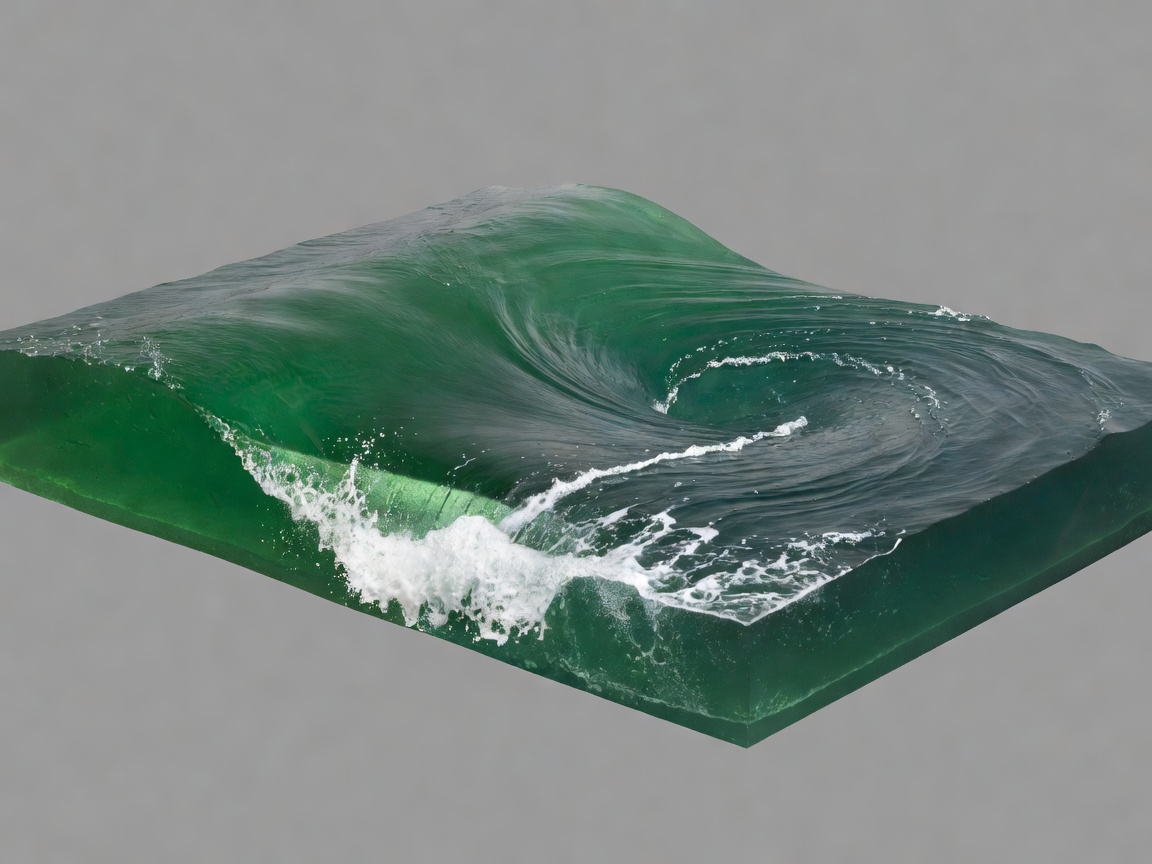
- Access
- How easily you can return from the eddy after each attempt.
- Retention
- How strongly the feature holds a boat; useful in moderation.
- Flush
- What happens downstream when you fall off or swim.
Why water choice comes before technique
Developing paddlers often treat every session as a test of courage on whatever feature is running. The result is a lot of time spent surviving and very little spent practising. Deliberate practice needs repetition with feedback, and repetition depends on the water. If each attempt costs a long walk back up the bank, ten attempts become three. If the feature is so retentive that every failed move turns into a fight, you start rehearsing the fight rather than the move.
The question to ask before launching is simple: will this feature let me attempt my target move at least fifteen to twenty times in this session with an acceptable consequence when I fail? If the honest answer is no, the feature may still be great for watching, filming others or building confidence, but it is not your technique venue today.
Holes and waves behave differently
A hole, sometimes called a stopper, forms where water drops over an obstacle and recirculates back upstream. It holds a boat in place, which makes it forgiving for learning spins, cartwheels and loops because you are not constantly sliding off. The cost is retention: a sticky hole with closed edges can be hard to exit, and rehearsing moves in it may teach you to rely on its grip.
A wave is a standing hump of water with a smooth green face. Waves reward speed and timing. Aerial moves such as air screws and Phonics Monkeys are mostly learned on waves with a steep, fast face and a foam pile that lets you set up. Waves usually flush more cleanly, but they are less forgiving of poor positioning; one late edge and you are downstream.
| Feature type | Learning strength | Common limitation | Typical first targets |
|---|---|---|---|
| Friendly hole | Holds you in place for repeated attempts | Can be retentive; edges may close at higher flows | Flat spins, cartwheels, side surfing |
| Green wave | Speed and air for aerial moves | Easy to flush off; needs good eddy access | Clean spins, blunts, air screws |
| Artificial course feature | Predictable, often adjustable flow | Busy queues at popular times | Structured drills, filming sessions |
| Flat water | No penalty for failure | No water energy to assist moves | Edge control, stern and bow squirts |
Flow changes everything
The same feature can be a perfect teaching hole at one flow and a dangerous recirculation at another. Natural river features change with rainfall, snowmelt and hydropower releases; artificial courses change with pump settings. Keep a simple log: the flow reading or gauge level, what the feature looked like, and how your session went. After a season, that log becomes the most useful venue guide you own, because it is calibrated to your level.
Use the International Scale of River Difficulty, maintained by American Whitewater, to describe the river around the feature, but remember the scale grades rapids rather than individual play spots. A friendly hole in an otherwise grade III section still demands the skills for the section you must paddle to get there or swim through if things go wrong.
Natural and artificial venues
Natural features such as Garburator and Buseater on the Ottawa River in Canada are central to freestyle history, and the river has long attracted paddlers from around the world for summer training. In Europe, the Noguera Pallaresa at Sort in Catalonia, Spain, hosted the 2019 ICF Canoe Freestyle World Championships and draws visitors through the warmer months.
Artificial courses offer something different: predictability. Holme Pierrepont National Water Sports Centre in Nottingham and the Lee Valley White Water Centre, built for the London 2012 Olympic slalom events, give paddlers controlled flows and clear safety arrangements. Hawea Whitewater Park in New Zealand is another example of a purpose-built venue with adjustable features. For deliberate practice, a predictable feature you can return to week after week is often more valuable than an occasional trip to a famous wave.
General guidance vs venue instruction: this page describes principles. Hazards, access rules, release schedules and booking requirements are venue-specific. Check with the operator, local clubs and qualified coaches before paddling anywhere new.
Safety arrangements that support practice
Practice works best when the consequence of failure is managed. Paddle with at least one other person who can reach you, agree signals before launching and know where the swim line goes. Swiftwater rescue training, such as courses from Rescue 3 International or your national federation, gives the group a shared language for rescues. Helmets, buoyancy aids designed for whitewater and appropriate thermal protection are baseline, especially in cold Nordic water where immersion reduces strength and judgement quickly.
A pre-launch checklist
Can I return to the feature quickly?
Identify the eddy, the ferry line and the time a full cycle takes. Under two minutes per attempt is a useful target.
What happens if I swim?
Trace the flush line, find the next safe eddy and agree who chases boats and who chases people.
Does this feature suit today's target?
Match feature to move: holes for rotational moves, steep waves for aerial work, flat water for edge drills.
Once the water is chosen, the next decision is how to use it. Continue with Make a move repeatable.